
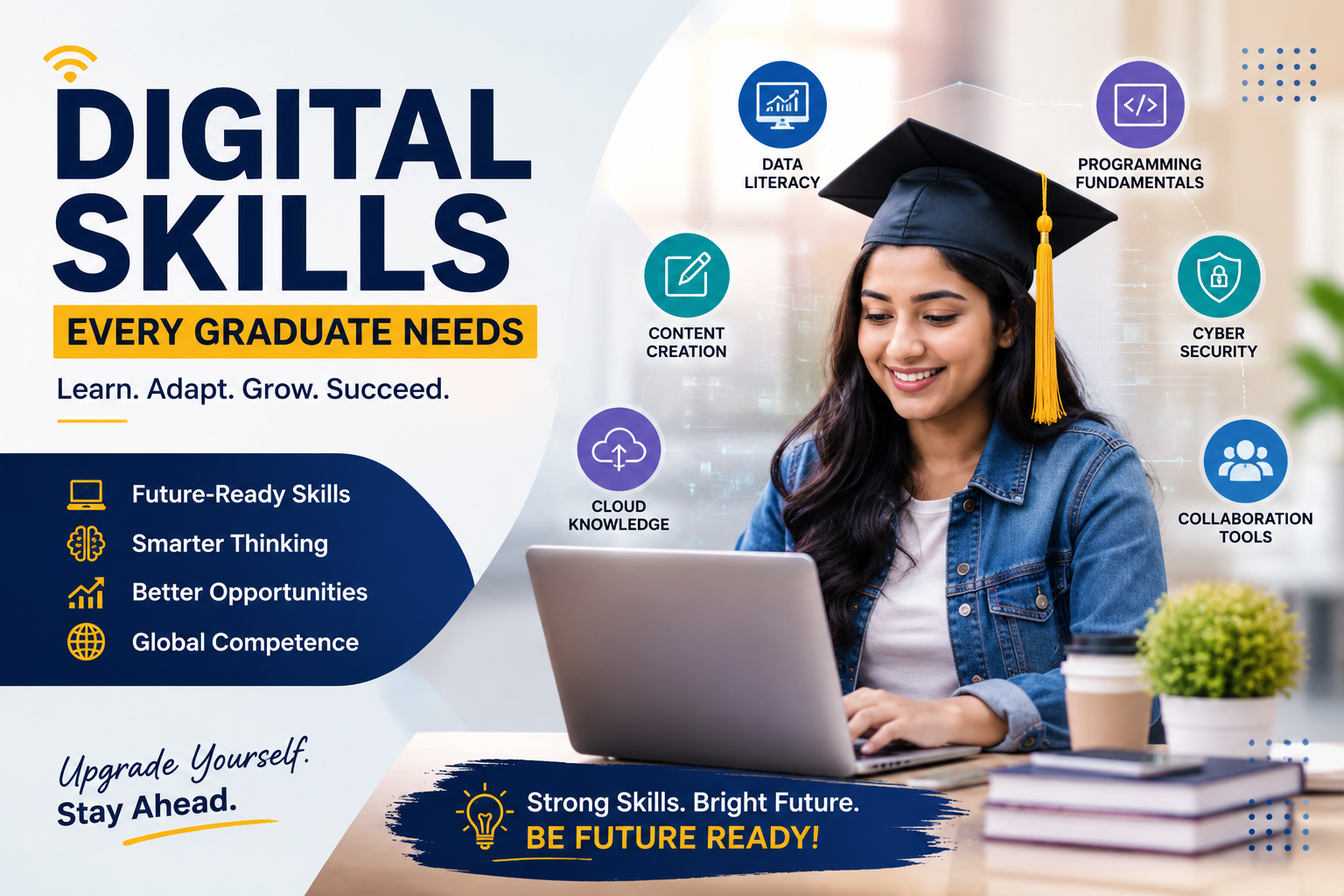
Graduating from college is an exciting milestone, but earning a degree alone is no longer enough to thrive in today's competitive job market. Employers are increasingly looking for graduates who not only possess academic knowledge but also have the digital skills needed to adapt to modern workplaces. As technology continues to transform every industry—from healthcare and education to finance, marketing, engineering, and entrepreneurship—digital literacy has become an essential part of professional success. Whether someone dreams of working for a multinational company, launching a startup, pursuing higher education, or building a freelance career, developing strong digital skills can create opportunities that extend far beyond the classroom.
One of the most fundamental skills every graduate should possess is digital literacy. This means being comfortable using computers, smartphones, cloud platforms, and online collaboration tools efficiently and responsibly. Employers expect graduates to create professional documents, prepare presentations, manage spreadsheets, organize digital files, participate in virtual meetings, and communicate effectively using digital platforms. Understanding how technology works and using it confidently allows graduates to become more productive and adaptable in any work environment.
Equally important is the ability to communicate professionally in the digital world. Emails, virtual meetings, instant messaging platforms, and collaborative workspaces have become the primary methods of communication in modern organizations. Writing clear emails, participating confidently in online discussions, maintaining professional etiquette during virtual meetings, and presenting ideas effectively are valuable skills that contribute to workplace success. Strong digital communication builds credibility and helps professionals collaborate efficiently with colleagues, clients, and teams across different locations.
The rapid growth of artificial intelligence has introduced another essential skill for graduates—the ability to use AI tools wisely. Artificial intelligence is no longer limited to technology companies; it is now helping professionals write reports, summarize information, analyze data, generate ideas, automate repetitive tasks, and improve productivity across various industries. Graduates should understand how to use AI as a support tool while continuing to apply critical thinking, creativity, and ethical judgment. Technology should enhance human abilities, not replace thoughtful decision-making.
Another valuable skill is data literacy. Every organization generates data, and professionals who can understand, organize, and interpret information are becoming increasingly valuable. Graduates do not need to become data scientists, but they should know how to read charts, interpret reports, work with spreadsheets, identify trends, and make informed decisions based on evidence rather than assumptions. The ability to understand data helps professionals solve problems more effectively and contribute meaningfully to organizational growth.
Cybersecurity awareness has also become a necessity rather than a specialization. As more work takes place online, protecting personal and professional information is everyone's responsibility. Every graduate should understand the importance of creating strong passwords, enabling two-factor authentication, recognizing phishing attempts, protecting confidential information, and practicing safe internet habits. A single careless click can compromise sensitive data, making digital security an essential life skill for every professional.
In today's connected world, personal branding has become another important aspect of career development. Employers often search online to learn more about potential candidates before making hiring decisions. Maintaining a professional online presence through platforms such as LinkedIn, creating a well-structured digital portfolio, showcasing projects, certifications, internships, achievements, and participating positively in professional communities can significantly improve career opportunities. A thoughtful digital identity reflects professionalism, credibility, and a willingness to learn.
Collaboration tools have transformed the way people work. Teams frequently collaborate across cities and even countries using cloud-based platforms to share documents, manage projects, and communicate in real time. Graduates who are comfortable using project management software, cloud storage, shared documents, virtual meeting platforms, and collaborative workspaces can adapt quickly to modern organizational environments. These skills not only improve efficiency but also demonstrate flexibility and teamwork.
Problem-solving in the digital age requires more than technical knowledge. Employers value graduates who can research information effectively, evaluate the credibility of online sources, identify reliable data, and use digital resources to solve real-world challenges. With an overwhelming amount of information available online, the ability to distinguish between accurate and misleading content has become an essential professional skill. Digital critical thinking helps individuals make informed decisions and contribute meaningful solutions in both academic and workplace settings.
The willingness to learn continuously is perhaps the most valuable digital skill of all. Technology evolves rapidly, and the tools used today may be replaced by newer innovations tomorrow. Successful professionals understand that learning does not end with graduation. They actively seek new knowledge, explore emerging technologies, earn certifications, attend webinars, complete online courses, and remain curious about developments in their industry. This mindset of continuous improvement allows graduates to stay relevant in an ever-changing job market.
While technical skills are becoming increasingly important, they should always be balanced with human qualities that technology cannot easily replace. Creativity, emotional intelligence, ethical decision-making, adaptability, communication, leadership, and empathy continue to distinguish exceptional professionals. Digital tools can improve efficiency, but human judgment, innovation, and meaningful relationships remain at the heart of successful careers. Graduates who combine technological competence with strong interpersonal skills are better prepared to navigate workplace challenges and contribute lasting value.
The future of work belongs to individuals who are willing to embrace change rather than fear it. Digital skills are no longer optional qualifications reserved for technology professionals; they have become essential competencies for graduates across every discipline. Investing time in developing these skills not only increases employability but also builds confidence, encourages lifelong learning, and prepares individuals to succeed in a world where innovation continues to reshape the way people live and work. A degree may open the first door, but digital skills empower graduates to confidently step through every opportunity that follows.