
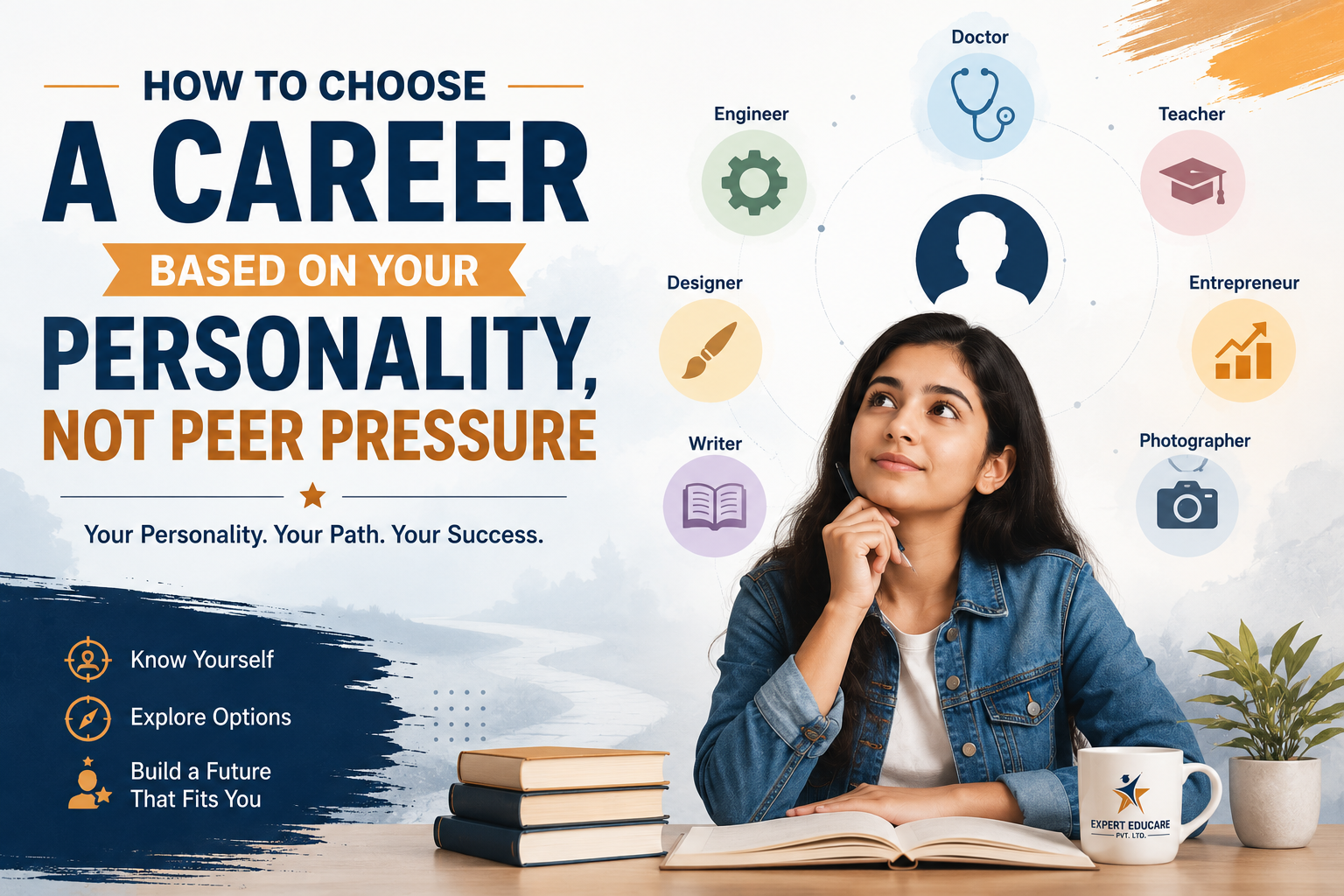
Every year, thousands of students choose their career path not because it genuinely excites them, but because it's what their friends are choosing, what's considered "in demand," or what feels safe within their social circle. Peer pressure in career decisions is rarely loud or obvious — it's subtle, often disguised as practical advice or shared ambition. Yet its impact on long-term career satisfaction can be significant.
Personality plays a far greater role in career success than most students realize. An introverted student who thrives in focused, independent work may struggle in high-pressure, people-facing roles chosen simply because "everyone's going into it." Similarly, an outgoing, expressive student may feel stifled in a rigid, highly technical field chosen only because it seemed like the safer, more respectable option.
The problem with peer-influenced choices is that they often prioritize belonging over alignment. It feels reassuring to choose the same path as friends — there's comfort in shared journeys, similar exam patterns, and familiar conversations. But comfort in decision-making doesn't always translate to comfort in the career itself, especially once the initial excitement fades and the day-to-day realities of the job begin.
Understanding your own personality is the first real step toward making an authentic career choice. Are you someone who enjoys structure and routine, or do you thrive in unpredictable, dynamic environments? Do you prefer working closely with people, or do you do your best thinking alone? Are you driven by creativity, logic, leadership, or service to others? These aren't abstract questions — they directly shape which careers will feel energizing versus which ones will feel draining, regardless of how prestigious they appear from the outside.
It's also important to recognize that peer pressure isn't always negative in intent — friends and classmates often mean well, sharing what excites them without realizing it may not suit someone with a different temperament. The responsibility, then, lies in learning to separate genuine interest from social influence, and having the confidence to choose differently when needed.
This is where structured self-reflection and personality-based assessments become valuable. Rather than relying on assumptions or trends, understanding one's own working style, motivations, and natural tendencies brings far more clarity than simply following the crowd.
Choosing differently from friends doesn't mean choosing wrong — it often means choosing more honestly. A career chosen to match your personality, rather than your peer group, is far more likely to feel sustainable, motivating, and genuinely fulfilling over time.
At Expert Educare Pvt. Ltd., we help students look inward before looking outward — using personality insights and honest self-reflection to guide career choices that are truly their own, not borrowed from someone else's journey.
The right career isn't the one your friends are choosing — it's the one that fits who you are.