
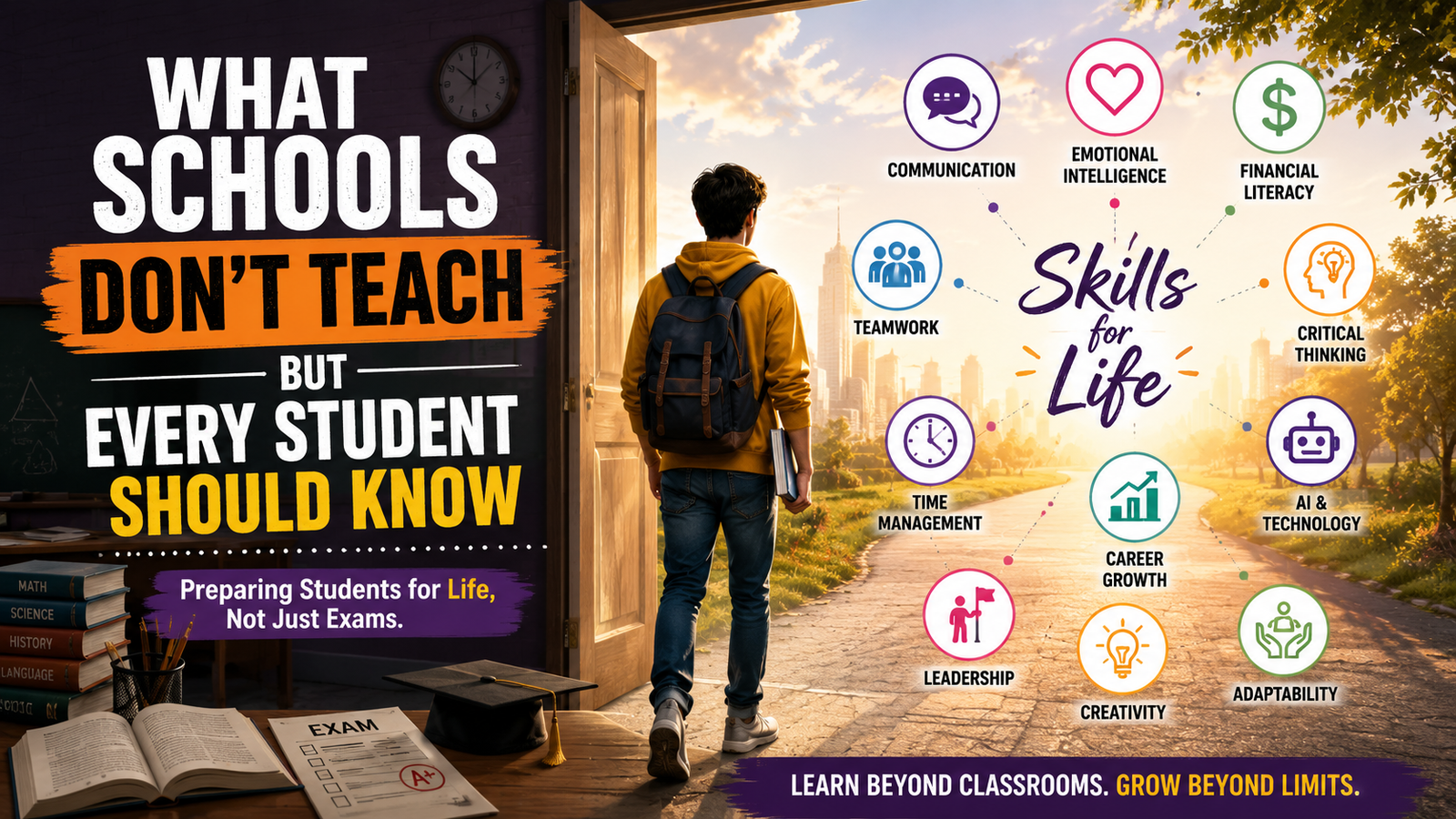
Education lays the foundation for knowledge, discipline, and intellectual growth, preparing students to understand the world around them. Schools play a vital role in teaching mathematics, science, languages, history, and other academic subjects that shape a student's educational journey. However, as students transition from classrooms to colleges and eventually into professional life, many realize that success depends on far more than textbooks and examination scores. The real world demands practical skills, emotional resilience, sound decision-making, and the ability to adapt to constant change—qualities that are often not emphasized within a traditional curriculum.
One of the most important lessons every student should learn is self-awareness. Understanding personal strengths, weaknesses, interests, values, and aspirations helps students make informed academic and career decisions. Without knowing themselves, many students choose careers based on social expectations or peer influence rather than genuine passion and ability. Self-awareness builds confidence and enables individuals to pursue paths where they can truly excel.
Another essential life skill is effective communication. Academic knowledge has little impact if students cannot express their thoughts clearly, listen actively, collaborate with others, or present ideas confidently. Whether attending a job interview, working in a team, or interacting with clients, communication often becomes the defining factor between opportunity and missed potential. Learning to speak with clarity, write professionally, and communicate respectfully is invaluable throughout life.
Schools also rarely teach the importance of emotional intelligence. Understanding emotions, managing stress, handling criticism, resolving conflicts, and showing empathy are skills that strengthen relationships and improve decision-making. Students who develop emotional intelligence are better equipped to navigate challenges, maintain mental well-being, and become compassionate leaders capable of inspiring others.
In today's rapidly changing world, financial literacy has become equally important. Many young adults complete their education without understanding budgeting, saving, investing, taxes, debt management, or financial planning. Learning how money works empowers students to make responsible financial decisions, avoid unnecessary debt, and build long-term financial security from an early age.
Equally significant is the ability to solve problems and think critically. Life rarely presents questions with predefined answers. Employers seek individuals who can analyze situations, evaluate options, and develop practical solutions rather than simply memorize information. Curiosity, creativity, and logical thinking allow students to adapt to new environments and confidently face unexpected challenges.
Another lesson that deserves greater attention is time management and self-discipline. Success is not built through motivation alone but through consistent habits and responsible actions. Students who learn to prioritize tasks, manage distractions, set realistic goals, and remain disciplined are more likely to perform well academically while maintaining a healthy balance between education, family, and personal life.
The digital age has also transformed the skills required for success. Beyond using smartphones and social media, students should understand digital literacy, online safety, responsible technology usage, Artificial Intelligence tools, and the importance of building a positive digital presence. Technology is no longer optional—it is a fundamental part of education, careers, and everyday life. Students who continuously learn new digital skills will be better prepared for the future workplace.
Perhaps the most valuable lesson is understanding that failure is not the opposite of success—it is a part of it. Schools often reward correct answers, but real life rewards persistence, adaptability, and continuous learning. Every setback offers an opportunity to improve, develop resilience, and gain experience that cannot be learned from books alone. Students who embrace failure as a learning experience become more confident, innovative, and willing to pursue ambitious goals.
Finally, every student should understand the importance of purpose, ethics, and lifelong learning. A successful career is not measured only by income or job titles but by meaningful contributions, integrity, compassion, and a willingness to keep growing. The world evolves rapidly, and the willingness to learn new skills, adapt to change, and contribute positively to society will always remain one of the greatest competitive advantages.
Schools provide the knowledge to begin the journey, but life teaches the lessons that truly define success. By developing practical life skills alongside academic excellence, students become more than good learners—they become confident thinkers, responsible citizens, compassionate leaders, and future professionals capable of creating a positive impact on the world. The most successful education is not one that prepares students only to pass examinations, but one that prepares them to face life with courage, curiosity, wisdom, and purpose.